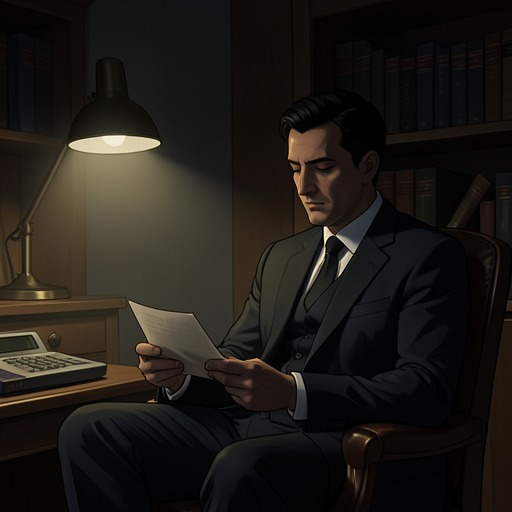
Juvenal Urbino and Jeremiah de Saint-Amour’s friendship
Love in the Time of CholeraJuvenal Urbino and Jeremiah de Saint-Amour’s friendship grew from a shared devotion to chess into an unusually intimate bond between men whose lives otherwise differed sharply. Urbino became Jeremiah’s protector and helped establish his photographic livelihood; Jeremiah became the formidable chess companion Urbino had been seeking. In death, Jeremiah left Urbino a letter that unsettled his understanding of the friend he had known, but Urbino’s actions afterward show that disclosure did not cancel affection: he defended Jeremiah’s memory, arranged for a discreet burial, and sought to preserve the portraits that documented a generation of children.
The Meeting Through Chess
When Jeremiah arrived in the city, his knees were already dead, and he was not yet a children’s photographer. He soon became known among local chess players for his exceptional skill: within less than three months, no one who knew how to move a bishop had been able to defeat him. Urbino, whose own passion for chess had become difficult to satisfy, saw the newcomer as a miraculous meeting. Their connection began not through social standing or shared biography, but through the demanding exchange of a game.
At first they played after supper, at seven o’clock. Jeremiah’s superiority earned him a reasonable handicap; as Urbino improved, the handicap was gradually reduced, until they played as equals. Chess gave their friendship a recurring structure and a language of reason. Later, Urbino understood their affinity as a dialogue conducted through the game rather than as chess science, a distinction that captures the personal quality of their contests: the board joined them without requiring either man to explain his past.
Protection and Shared Companionship
Urbino’s support extended beyond the chessboard. He made himself Jeremiah’s unconditional protector and guarantor without first learning who Jeremiah was, what work he did, or where his troubled past had begun. When Jeremiah decided to establish a photography studio, Urbino lent him the money. Jeremiah repaid every penny with religious regularity, but the loan’s importance lay in more than its financial terms: it helped him build the independent trade that would define his life in the city.
Jeremiah’s first photograph of a child, startled by the magnesium flash, marked the beginning of his work as a photographer. The studio eventually became a place of enduring significance to Urbino. During years of chess-playing afternoons, the Doctor watched the walls fill with portraits of children at milestones such as First Communion, birthdays, and costume occasions. Those images made the studio not simply Jeremiah’s workplace but an accumulating record of the city’s young inhabitants and possible future.
The friends’ routine changed with the arrival of the city’s first outdoor cinema. Jeremiah became one of its most dependable customers, and chess was then reserved for evenings when no new film was being shown. The two men also went to the movies together, but not with Urbino’s wife: she lacked patience with complicated plots and, by intuition, regarded Jeremiah as unsuitable company. That private reservation stands beside the closeness of the men’s friendship without undoing it. Their time together remained a distinct companionship, sustained by chess and shared outings rather than incorporated into family life.
The Last Game and the Letter
After Jeremiah’s death, Urbino found an unfinished chess game in the studio. It was unlike Jeremiah’s established habit: he played several opponents at dusk, but ordinarily finished each game, put the pieces away, and stored the board in a desk drawer. The position suggested that Jeremiah, playing white, would be defeated in four moves. Urbino recognized the trap as a masterful one and wondered why a fighter who had never yielded easily had left the final contest of his life incomplete.
The posthumous letter and the woman who had been with Jeremiah supplied an answer. Jeremiah had been Urbino’s opponent in the final game, not General Jerónimo Argote as Urbino had assumed. He stopped playing at about a quarter past eleven, after the public-dance music ended, and asked her to leave so he could write to Urbino, whom he regarded as the most honorable man he had known and his soul’s friend. She understood that his suffering had reached its end and that he had only enough time left to write the letter. She had known of his decision and helped him through his final eleven months of suffering.
The letter transformed the friendship’s meaning for Urbino. Jeremiah’s concealed identity and past, disclosed after death, struck him as an irrevocable revelation. The disclosure did not make him cease to care for Jeremiah, but it disrupted the image of an almost saintly friend that had formed through years of chess and daily familiarity. The unfinished game becomes an exact counterpoint to the letter: one leaves a contest open, while the other forces Urbino to reconsider how much of a friend’s life can remain unknown even in a close relationship.
Loyalty After Death
Urbino’s first response to the death was practical and protective. He ordered the inspector to bypass legal procedures so the burial could occur that afternoon and with discretion. Knowing Jeremiah’s austere habits and that his photography earned more than he needed, Urbino expected to find enough money for funeral expenses in a drawer; when he told the inspector that the money need not be found, he offered to cover everything himself. He also ordered the inspector to tell the press that Jeremiah had died of natural causes, and was prepared to speak to the Mayor if necessary.
There was one boundary Urbino would not cross: he would not approach the Archbishop to obtain burial in consecrated ground. The distinction reveals the tension between civic authority, personal loyalty, and religious convention. Urbino could use his standing to hasten the burial and protect Jeremiah’s privacy, but he would not claim to settle the religious question of where Jeremiah belonged after death. He called him an atheistic saint, leaving judgment on that matter to God.
At a later gathering, Urbino publicly restored the friend whom the letter had made difficult to defend. He spoke of Jeremiah’s dedication to making children happy through his art, his knowledge of worldly matters, his Spartan habits, and the purity with which he had separated himself from his past. He also proposed buying Jeremiah’s photographic plates for an archive, so that the images of a generation might be preserved. When asked who would arrange the purchase, Urbino kept the matter in his own hands. His discretion protected the secret while his proposal gave the work lasting civic value.
Friendship as Memory and Contradiction
The archive proposal draws together the two sides of the friendship: intimate loyalty to a man and public concern for what his work had preserved. The portraits mattered to Urbino because they recorded children whose later lives might shape the city, while Jeremiah’s suicide and concealed history made the photographer’s own place in that city precarious. Urbino’s response was neither to erase the revelations nor to let them define Jeremiah completely. He continued to speak of his generosity and discipline, and he acted to preserve the photographs without exposing the secret entrusted to him.
Their friendship therefore rests on an acknowledged incompleteness. Urbino had served as Jeremiah’s guarantor without investigating his origins; their chess conversations joined them through reason while leaving much of each man’s life outside the game. The posthumous letter made that distance newly visible, but it did not undo the years of companionship. In the end, Urbino’s fidelity appears less as certainty about who Jeremiah had been than as a decision to honor the friend he had known while carrying the knowledge he had not possessed.